
Gmoffi Corner – Game Maker Spotlight: Jenny Tirkkonen
22.10.2026
Demoscene as a hobby: The story of Palloeläin Productions
Demoscene – from piracy into digital art
Demoscene is defined as a computer hobbyist subculture which consists of programming audiovisual artwork that a program, aka demo, then produces and plays in realtime. Roots of demoscene go all the way back to the 1980s when home computers had started to become more common and various hacker groups that operated in breaking the protections of copywrighted commercial games started adding their own animated logos to the games they were distributing. When a game with broken copywright seal was booted, the first thing that would display on the screen was the message from the hacker group, often called a cracktro, a combination of the words ”crack” and ”intro.” Soon the focus of the hacker groups started shifting from piracy into developing their intros as impressive as possible and halfway through the 80s it had already become common to distribute the intros independently as artwork. The demoscene was born.
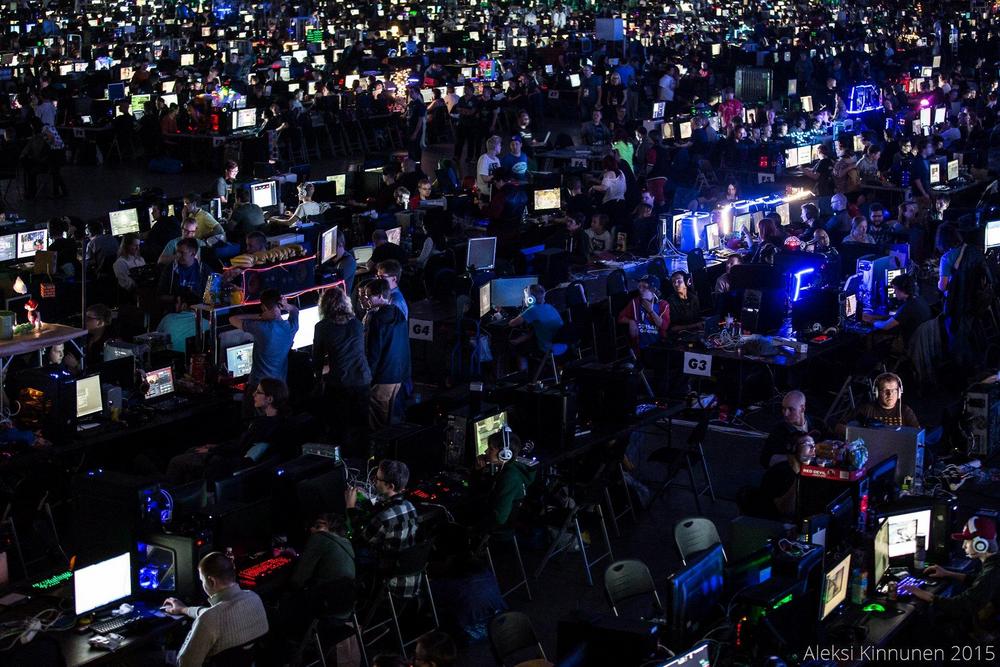
Finland has always been known for its active, high quality demoscene.It is highly likely, that demoscene has birthed far more finnish game studios than any business incubator. For example, Housemarque and Fingersoft both started out as demogroups.
Besides a booster for the economy, the demoscene is also widely acknowledged and valued as an art form. In April 2020, the finnish Ministry of Education and Culture added demoscene as the first form of digital art to the National Inventory of Living heritage. Finland is also part of the Art of Coding -act, which aims to have the demoscene added to the UNESCO Intangible Cultural Heritage List.
From gamer to a demoscener
My heart is racing in the auditorium when the trailer starts rolling. This is it, the culmination of all the hard work. Tiredness melts away as the rush of adrenaline takes over. My first gamedev. competetion was simply a mindblowing experience.
Palloeläin Productions was born when I met my future spouse. When a 3D-artist and a coder found each other, there were pixelated hearts everywhere. Looking back I can’t help but smile at the memory of us thinking that from all the activities in the world, our first thought was that we are going to start a demogroup and start making games.
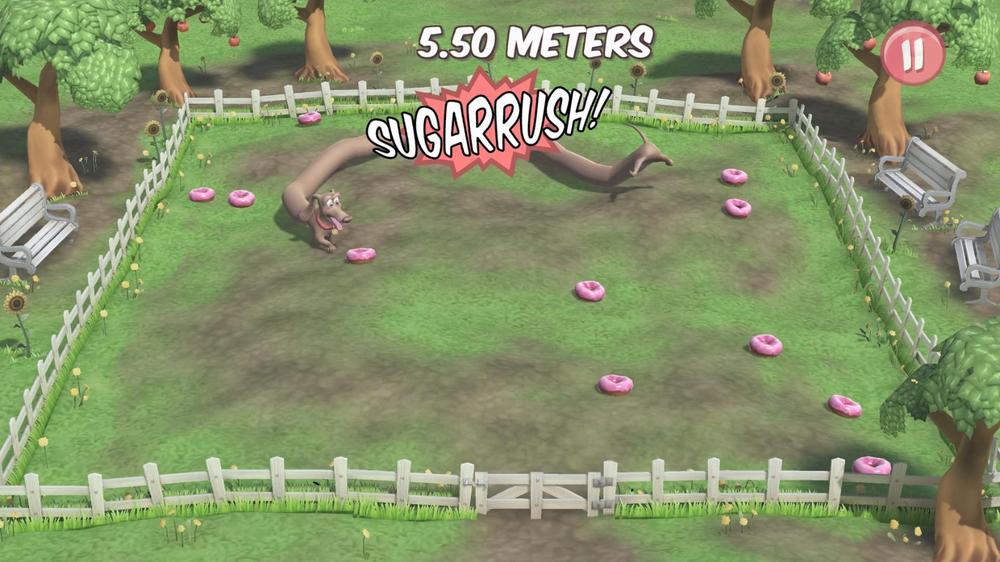
Assembly gamedev. competetion seemed like a good venue to try out our wings as gamemakers. Our first collaboration, Hot Doggety!, where the player controls a donut munching dachshund gaining length like snake, debuted at the Assembly Summer 2015, scoring second in the compo and receiving positive feedback surpassing even our wildest expectations. The game was later available on Googlepay, gaining 10 000 organic downloads and we even discovered some let’s play -videos about it in Youtube. The message was loud and clear: This works. Keep going.
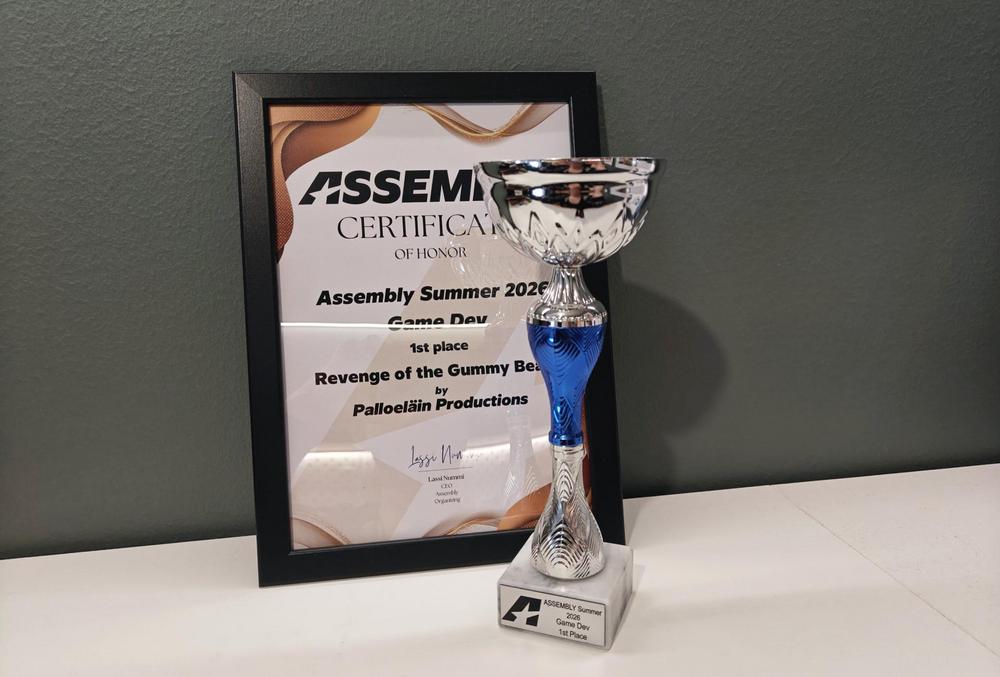
Palloeläin Productions have competed five times in the Assembly Summer gamedev. competition and it has two gold medals, two silvers and one bronze under its belt. These years have been an amazing experience filled with lots of hard work and undoubtedly hundreds of litres of strong coffee. As our time management skills have improved, our ambition has also dangerously gone up and every year the stealthy approach of the compo deadline still manages to give us a jump scare. Even though the panic and staying up late can never be completely avoided, the Assembly gamedev. compo is still the highlight of our year.
Inspiration comes from everyday life
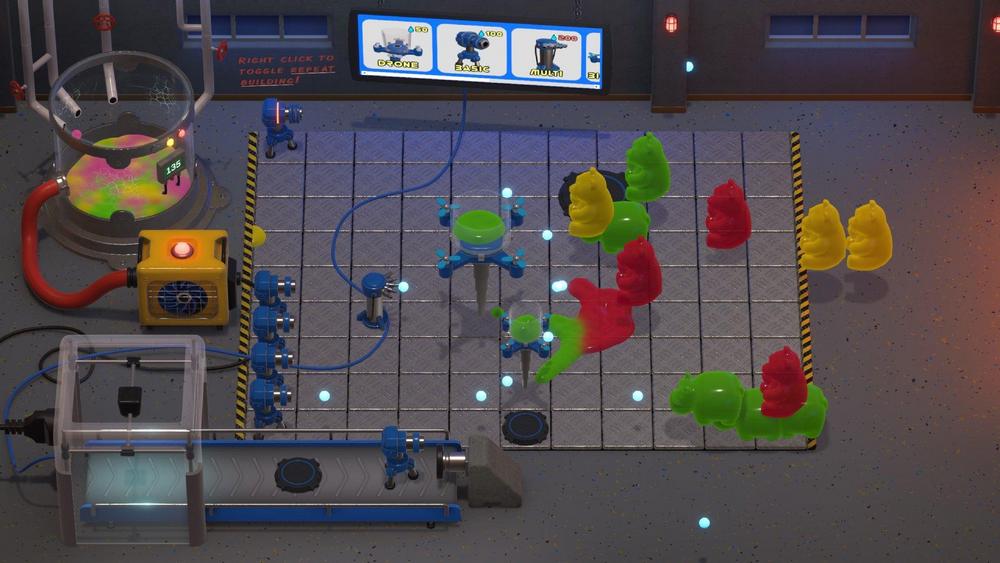
Donut eating dachshund that stretches longer and longer. A ferret in a space suit. Gummy bears coming alive. People often ask how on earth do we come up with this stuff. Many times inspiration can be found closer than you think, and often it is a mixture of both parties. For example the mother of my spouse owns a dachshund. Every Blender user then again is aware of the donut tutorial by Andrew Price. So when a dachshund modelled in Blender needed a power-up item, these thoughts fused into a dog that loves donuts. Our latest game, Revenge of the Gummy Bears with its murderous but delicious giant gummy bears also gives away my personal vice for soft fruit candy (I’m strongly considering of buying a lock to keep myself out of our shared candy stash!) My spouse on the other hand loves tower defense mechanics and plays a lot of factory simulators. Together these ingredients took the form of a game where the player defends a candy factory from an invasion of living gummy bears.
Palloeläin’s small survival kit of gamedev
When participating to a gamedev. competion, aka gamedev. compo, keep the scope small. The time can and will run out. Flesh out what core functions the game needs to work and what are you willing to cut. Old joke of the IT industry goes, that you should estimate how long something is going to take and then triple that. There’s a lot of truth in it.
Making games is fun, but even a simple game can be a huge amount of work -so make sure you pull in all your friends too so they don’t ask what happened to you and can instead be part of the experience. When you have a bigger team, everyone has a unique skillset and it is possible to have more dedicated roles in the development, which makes it less stressful.
When the game is complete, it is time to do a trailer. Everyone at the demoparty won’t have time to try out your game, so an exciting trailer is a must in the public vote. Try to avoid dragging on the intro too long so that there is enough time for the actual game footage. The maximum allowed length of a trailer in gamedev. is often quite short, for example at Assembly the limit is 3 minutes. At last, make sure that the trailer is understandable also for a viewer who is not familiar with your game.
The most important advice we can give, however, is that remember to take time to care for your own wellbeing too. A good night’s sleep is a smarter choice than that one more cup of coffee and sometimes fresh air is more powerful than any painkiller. Gamedevelopment is not a sprint -it is an endurance sport.
Written by Jenny Tirkkonen